-
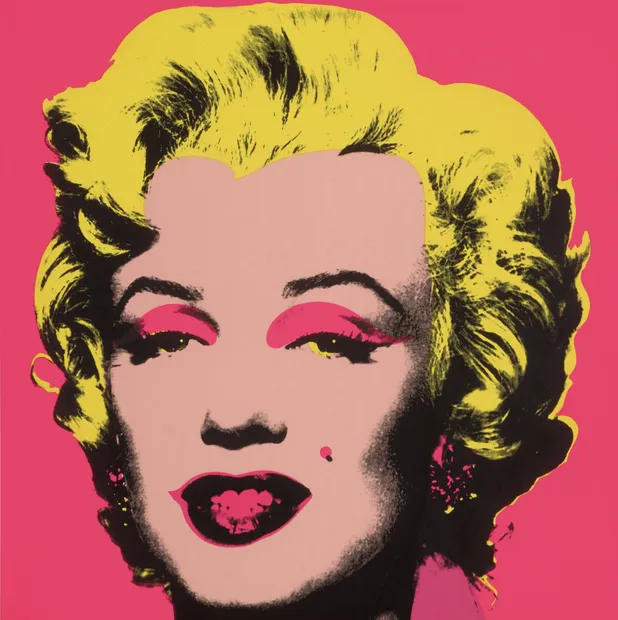
 Marilyn Monroe (Monroe) (F. & S. II.31), 1967Screenprint on paper, 91.4 x 91.4 cm (36 x 36 in.) 250 signed in pencil and numbered with a rubber stamp on verso, plus 26 signed AP and lettered A-Z on versoPrinter: Aetna Silkscreen Products, Inc., NY, Publisher: Factory Additions, NY© The Andy Warhol Foundation
 -
"Everyone needs a fantasy."
- Andy Warhol
Andy Warhol began working with silkscreen printing in 1962, the same year Marilyn Monroe died, a moment that had a profound impact on his practice. Monroe’s death was widely reported across newspapers and television, making her image one of the most circulated in American media at the time. Warhol seized on this overlap between personal tragedy and mass exposure, using the silkscreen process to translate a publicity still from the 1953 film Niagara into a repeatable image. The technique allowed him to mimic the look of mechanically reproduced photographs, aligning his work with the visual language of advertising and print media.