-
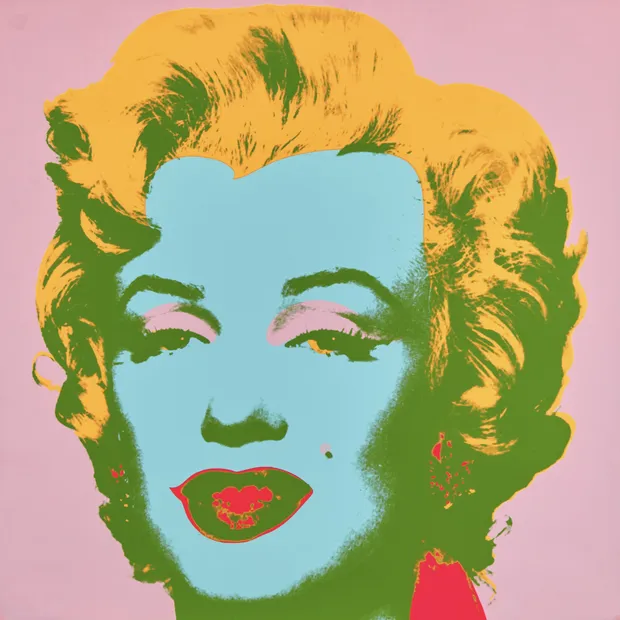
 Marilyn Monroe (Monroe) (F. & S. II.28), 1967Screenprint on paper, 91.4 x 91.4 cm, edition of 250 signed in pencil and numbered with a rubber stamp on verso plus 26 signed AP and lettered A-Z on versoPrinter: Aetna Silkscreen Products, Inc., NY, Publisher: Factory Additions, NY© The Andy Warhol Foundation
 -
"I don’t feel I’m representing the main sex symbols of our time in some of my pictures... I just see Monroe as just another person."
- Andy Warhol
Andy Warhol began producing his Marilyn images in 1962, shortly after the death of Marilyn Monroe, at a moment when her face dominated newspapers, film, and popular culture. Warhol translated a widely circulated photograph into a repeatable silkscreen image, aligning Monroe with the mass-produced imagery that defined post-war America. The 1967 Marilyn Monroe portfolio formalised this approach into a set of ten screenprints, each varying in colour but identical in composition, reinforcing his interest in repetition, celebrity, and the mechanics of image reproduction.